Project Description
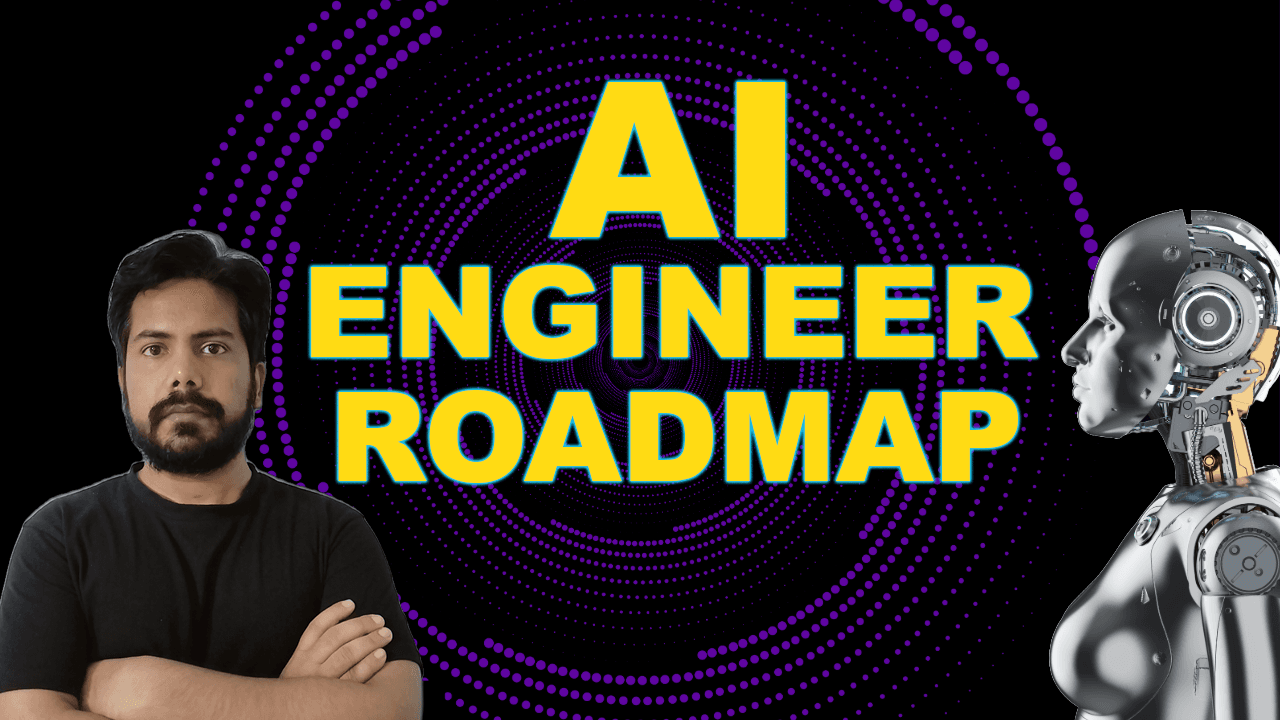
🛤️ AI Engineer Roadmap
🧠 AI Engineer Summary — Key Points
-
Role: Designs, builds, and deploys AI models and systems to solve real-world problems.
-
Core Skills:
-
Machine Learning (ML)
-
Deep Learning (DL)
-
Data Preprocessing and Cleaning
-
Programming (Python, TensorFlow, PyTorch)
-
Model Evaluation and Optimization
-
-
Foundational Knowledge:
-
Mathematics (Linear Algebra, Calculus, Probability, Statistics)
-
Data Structures and Algorithms
-
-
Specializations (Optional):
-
Computer Vision (CV)
-
Natural Language Processing (NLP)
-
Reinforcement Learning (RL)
-
MLOps (for model deployment)
-
-
Tools & Technologies:
-
Libraries: Scikit-learn, OpenCV, Hugging Face
-
Cloud: AWS, Azure, GCP
-
Containers: Docker, Kubernetes
-
-
Soft Skills:
-
Problem-Solving
-
Critical Thinking
-
Communication (to explain complex AI concepts)
-
-
Typical Industries:
-
Tech, Finance, Healthcare, Manufacturing, E-commerce
-
-
Salary Range (2025):
-
India: ₹6 LPA – ₹40 LPA+
-
Worldwide: $100,000 – $200,000+
-
-
Career Path:
-
Junior AI Engineer → AI Engineer → Senior AI Engineer → AI Architect / Research Scientist
-
🌟 What is Machine Learning (ML)? — Explained with a Real-World Example
Imagine you are teaching a small child to recognize apples and bananas.
-
🍎 You show many pictures: Some of apples and some of bananas.
-
🧠 The child notices patterns: Apples are round and red, bananas are long and yellow.
-
🎯 Next time, even if you show a new picture, the child can guess whether it’s an apple or banana — without you telling them!
👉 That’s Machine Learning:
-
Instead of a child, a computer is trained with lots of data (pictures).
-
It learns patterns from the data.
-
Then it can make predictions (like "this is an apple") without being told what rules to follow!
🖥️ Real-World Example:
-
Netflix recommends you movies by learning from what you watched before.
-
Google Maps predicts traffic by learning from millions of users' driving patterns.
-
Email apps detect spam emails by learning from examples of spam and non-spam emails.
🌟 What is Deep Learning?
Deep Learning (DL) is a special part of Machine Learning where computers learn from data using big structures called Neural Networks — kind of like how a human brain works!
🧠 Imagine This:
-
Machine Learning is like teaching a child simple tricks ("this is an apple", "this is a banana").
-
Deep Learning is like teaching a teenager to think more deeply — understanding not just colors and shapes but also hidden details like textures, emotions, and even voices!
🖥️ Real-World Examples:
-
Self-driving cars use deep learning to understand roads, people, and obstacles.
-
Voice assistants (like Alexa, Siri) use deep learning to understand and answer your questions.
-
Face recognition on your phone uses deep learning to identify you.
🌟 What is a Neural Network?
A Neural Network is a system in computers that tries to work like a human brain — it takes inputs, learns patterns, and makes decisions.
🧠 Think of it like this:
-
Human brain has neurons (brain cells) that pass signals to each other.
-
Neural networks have artificial neurons (tiny computer parts) that pass information to each other.
Each neuron in the network does simple work, but together they solve big problems — like recognizing a face or translating a language!
🛠️ How It Works (Super Simple):
-
Input Layer → takes in information (like a photo or a sentence).
-
Hidden Layers → do smart thinking (analyze patterns).
-
Output Layer → gives the final answer (like "this is a cat" or "this is English").
📚 Real-World Example:
-
When you upload a photo to Facebook and it suggests your friend's name — that's a neural network at work!
-
When YouTube recommends videos you might like — neural networks help with that too.
🌟 What is a Model in AI Engineering?
In AI, a model is a mathematical representation that learns patterns from data and makes predictions or decisions based on that data.
🧠 How It Works:
-
Training:
-
The model learns from lots of data (like images, text, numbers).
-
It uses algorithms to find patterns and relationships in the data.
-
-
Prediction:
-
Once trained, the model can predict or classify things, like predicting the weather, recognizing an image, or translating text.
-
🛠️ Example of AI Models:
-
Linear Regression Model: Predicts a value (e.g., predicting house prices based on size).
-
Neural Networks: Recognize complex patterns like faces or voice commands.
-
Decision Trees: Used for classifying or making decisions (e.g., whether a loan application should be approved).
📚 Model Types:
-
Supervised Learning Models: Trained on labeled data (e.g., pictures labeled as "dog" or "cat").
-
Unsupervised Learning Models: Find patterns in data without labels (e.g., grouping similar items together).
-
Reinforcement Learning Models: Learn by trial and error (e.g., training an AI to play a game).
🌟 What is NLP (Natural Language Processing)?
NLP (Natural Language Processing) is a field of AI that helps computers understand, interpret, and generate human language (like English, Spanish, etc.).
🧠 How It Works:
-
Input: The computer takes in text or speech (e.g., "How's the weather today?").
-
Processing: The computer analyzes the text and breaks it down into smaller parts (e.g., words, sentences).
-
Understanding: It uses algorithms to understand the meaning or intent of the sentence.
-
Output: The computer responds in a meaningful way (e.g., "The weather is sunny and 75°F today.").
🛠️ Key Tasks in NLP:
-
Text Classification: Identifying the topic of a text (e.g., spam vs. non-spam emails).
-
Sentiment Analysis: Understanding emotions in text (e.g., positive or negative reviews).
-
Named Entity Recognition (NER): Identifying names, dates, places, etc., in a sentence.
-
Machine Translation: Translating text from one language to another (e.g., English to French).
-
Speech Recognition: Converting spoken language into text (e.g., Siri or Alexa).
📚 Real-World Examples of NLP:
-
Google Translate: Translates sentences from one language to another.
-
Siri & Alexa: Understand your voice commands and respond with answers.
-
Chatbots: Like the one you're interacting with — they understand your text and provide responses.
1. Foundations
Before diving into AI, you need a strong base.
📚 Mathematics
-
Linear Algebra
-
Vectors, Matrices, Tensors, Eigenvalues/Eigenvectors
-
-
Calculus
-
Derivatives, Gradients, Chain Rule, Partial Derivatives
-
-
Probability and Statistics
-
Bayes Theorem, Distributions (Normal, Binomial, etc.), Expectation, Variance
-
-
Optimization
-
Gradient Descent, Stochastic Gradient Descent, Convex Functions
-
💻 Programming
-
Python (most popular for AI/ML)
-
Basics: Loops, Functions, OOP
-
Libraries:
NumPy,Pandas,Matplotlib
-
-
Good to know:
C++(for speed in production AI models),Java,Go(for backend AI engineering)
2. Core Skills
These are the tools and techniques you must master.
📦 Machine Learning
-
Supervised Learning (Regression, Classification)
-
Unsupervised Learning (Clustering, Dimensionality Reduction)
-
Reinforcement Learning (Q-Learning, Policy Gradients)
-
Important Algorithms:
-
Linear Regression, Logistic Regression
-
Decision Trees, Random Forests
-
KNN, K-Means Clustering
-
SVM (Support Vector Machines)
-
Neural Networks (MLP)
-
🛠️ Tools/Libraries:
scikit-learn, XGBoost, LightGBM
🧠 Deep Learning
-
Neural Networks Basics (Perceptrons, MLP)
-
CNN (Convolutional Neural Networks) — for images
-
RNN (Recurrent Neural Networks), LSTM, GRU — for sequences
-
Transformers (BERT, GPT) — for text and vision now!
-
Important Concepts:
-
Activation Functions (ReLU, Sigmoid, Tanh)
-
Loss Functions (MSE, Cross Entropy)
-
Backpropagation
-
Batch Normalization
-
Dropout Regularization
-
🛠️ Libraries:
TensorFlow, PyTorch, Keras
🛠️ Practical Engineering Skills
Data Preprocessing
-
Cleaning, Feature Engineering, Feature Scaling
-
-
Model Evaluation
-
Accuracy, Precision, Recall, F1-Score, ROC-AUC
-
-
Hyperparameter Tuning
-
Grid Search, Random Search, Bayesian Optimization
-
-
Deployment
-
Model Saving (Pickle, ONNX, SavedModel)
-
REST APIs (FastAPI, Flask)
-
Dockerizing AI applications
-
-
Model Monitoring
-
Drift Detection, Retraining Pipelines
-
3. Specializations
After core skills, you can specialize based on your interest.
📸 Computer Vision
-
Object Detection (YOLO, SSD, Faster R-CNN)
-
Image Segmentation (U-Net, Mask R-CNN)
-
Image Generation (GANs, Diffusion Models)
📝 Natural Language Processing (NLP)
-
Text Classification, Sentiment Analysis
-
Named Entity Recognition (NER)
-
Machine Translation
-
Large Language Models (LLMs) like GPT, LLaMA, Mistral
🧪 Reinforcement Learning
-
OpenAI Gym basics
-
Deep Q-Networks (DQN)
-
Proximal Policy Optimization (PPO)
📈 AI for Tabular Data
-
Kaggle Competitions
-
Feature-rich datasets (finance, healthcare, etc.)
4. Advanced Topics
-
Self-Supervised Learning
-
Diffusion Models (like Stable Diffusion)
-
Few-shot Learning / Zero-shot Learning
-
Federated Learning (AI without sharing data)
-
MLOps (Machine Learning Operations)
-
Model CI/CD Pipelines
-
Model Versioning (DVC, MLflow)
-
5. Career Building
📂 Build a Strong Portfolio
-
GitHub projects: real-world applications (not just Titanic datasets)
-
Kaggle Competitions: Top rankings help a lot!
-
Personal blog/LinkedIn: Write about AI topics
🛠️ Popular Project Ideas
-
Build your own ChatGPT (small version)
-
Face Recognition App
-
Stock Price Predictor
-
AI Game Bot (play simple games)
-
Image Caption Generator
🎓 Certifications (Optional but Good)
-
DeepLearning.AI (Andrew Ng courses)
-
Google TensorFlow Certificate
-
AWS/Azure AI/ML Engineer Certificates
📈 Tools & Infrastructure Knowledge
-
Data Version Control (DVC)
-
Experiment Tracking (MLflow, Weights & Biases)
-
Cloud Platforms: AWS Sagemaker, Google Vertex AI
-
Databases: MongoDB, PostgreSQL (for data storage)
🚀 Step-by-Step Learning Timeline (Example)
| Time | Focus | Tools |
|---|---|---|
| 0-3 months | Python, Math, ML basics | scikit-learn, Pandas |
| 3-6 months | Deep Learning Basics | TensorFlow, PyTorch |
| 6-9 months | Specialization (CV or NLP) | HuggingFace, OpenCV |
| 9-12 months | MLOps + Deployment | FastAPI, Docker, AWS |
| 1 Year+ | Real-world Projects + Jobs | Portfolio, Kaggle |
🏁 Important Mindset Tips
-
Consistency > Intensity (Learn daily even if a little)
-
Projects > Theory (Implement more)
-
Collaboration (Kaggle, GitHub collabs)
-
Stay Updated (AI is evolving fast; follow ArXiv, HuggingFace blog, DeepMind papers)